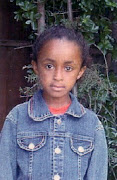
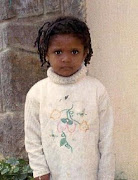
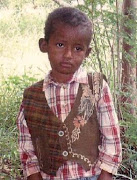
Red Hand Day, held on February 12, is an annual commemoration day created to draw attention to the fate of children who are forced to serve as soldiers in wars and armed conflicts. The aim of Red Hand Day is to call for action against this practice, and support for children who suffer from this severe form of child abuse. Examples for massive use of children as soldiers in recent years include armed conflicts in the Democratic Republic of the Congo, Rwanda, Uganda, Sudan, Côte d'Ivoire, Myanmar, Philippines, Colombia, and Palestine.
Red Hand Day was initiated in 2002 when the Optional Protocol to the Convention on the Rights of the Child on the Involvement of Children in Armed Conflict entered into force on February 12, 2002. This protocol was adopted by the General Assembly of the United Nations in May 2000. It currently has signatures from 92 different states. A number of international organizations are active against the use of children as soldiers. These organizations include, for example, the United Nations Child Fund (UNICEF), Amnesty International, Terre des Hommes or the International Red Cross and Red Crescent Movement.
The work of these organizations can be summarized by the acronym DDR:
Disarmament
Demobilization
Reintegration
The military use of children is addressed by a number of international legal norms. These include International human rights law and International humanitarian law. According to the Additional Protocols I and II to the Geneva Conventions, adopted in 1977, children who have not attained the age of 15 years shall neither be recruited in the armed forces or groups, nor allowed to take part in hostilities. For persons older than 15 but younger than 18 years, the State Parties to the Geneva Conventions shall endeavour to give priority to those who are oldest. The "Optional Protocol to the Convention on the Rights of the Child on the Involvement of Children in Armed Conflict", adopted in 2000, stipulates that its State Parties shall take all feasible measures to ensure that persons below the age of 18 do not take a direct part in hostilities, and that they are not compulsorily recruited into their armed forces. In addition to these legal norms, The Worst Forms of Child Labour Convention of the International Labour Organization, adopted in 1999, includes forced or compulsory recruitment of children for use in armed conflict as one of the worst forms of child labour. In the context of this convention, the term "child" applies to all persons under the age of 18 years. The worldwide number of child soldiers is estimated to be between 250,000 and 300,000 (as of 2006), a third of whom are girls; however it is difficult to know the correct number, as most of them are deployed in armed rebel groups.
 Search for Rwanda quake survivors
Many people remain trapped under rubble in Rwanda after a series of earthquakes hit the Great Lakes region, police say. They fear more people will die. At least 40 were killed in Rwanda and neighbouring Democratic Republic of Congo after Sunday's quakes. Many people spent Sunday night sleeping in the open in the DR Congo town of Bukavu in case of further tremors. At least 10 people were killed in Rwanda's western Rusizi district when a church collapsed during Sunday mass. Bukavu mayor Guillaume Bonga told the AFP news agency that there were several aftershocks overnight but he said there were no new victims. More than 300 people were injured by the most powerful earthquakes, which had magnitudes of 6.0 and 5.0. Officials said 34 people had died in Rwanda and six in DR Congo. Jacqueline Chenard from the UN's peacekeeping mission in DR Congo (Monuc) was in Bukavu when the quake struck. "There was panic all over town. People started running around, crying," she told the BBC's Network Africa programme. The quakes were also felt in neighbouring Burundi, disrupting hydroelectric power and causing a half-hour electricity cut. A powerful 6.8 magnitude earthquake rocked the region in December 2005. But while it is prone to seismic activity, it has mostly escaped major quakes in recent years.
Here's the Headlines on msnbc.com:
Eastern Congo militia groups sign peace deal
Treaty calls for immediate
cease-fire in embattled African country
...but we all know what those African tribal peace treaties/cease-fires can be like. It's a sad reality that this could only be temporary. But maybe, just maybe, this one may work, this one may give the poor victims who have been forced from their homes, who have relatively no health care and no security to speak of, maybe this could allow them time to reset their lives, to flee and get to a place that can be safe. I feel the only safe place is in the arms of their Jesus. But I pray that they can find peace where they are.